By Todd Hurst
December 11, 2025
In-Floor Radiant Heat
Warm from the Ground Up: In-Floor Radiant Heat for Your Barndominium
If you’re building or living in a barndominium, you already know they’re not “typical” homes. Tall ceilings, wide-open floor plans, big garage or shop areas, and lots of concrete make them unique, beautiful, and incredibly functional.
They also come with one big challenge: how do you heat all that space efficiently and comfortably, without drafty rooms and sky-high utility bills?
That’s where in-floor radiant heat shines.
In this post, we’ll walk through what radiant floor heating is, why it’s such a smart choice for barndominiums and pole barn homes, what to consider during design, and some common questions homeowners ask before they commit.
What Is In-Floor Radiant Heat?
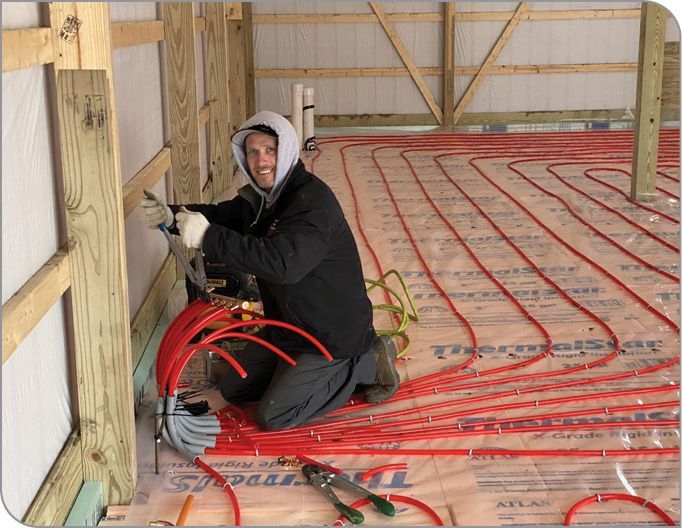
In-floor radiant heat (also called radiant floor heating or hydronic radiant heat) is a system that warms your home from the ground up. Instead of blowing warm air through ducts, it uses warm water circulating through tubing embedded in your concrete slab or under your flooring.
That gentle heat turns your floor into a giant, low-temperature radiator. The warmth rises evenly through the space, keeping everything—from your toes to the tall ceiling—at a comfortable, consistent temperature.
Basic components of a hydronic radiant system
- Heat source: boiler, combi-boiler, hydronic heat pump, or water heater designed for space heating
- Piping: PEX tubing laid out in loops across the floor
- Manifold: where all the tubing loops connect and are balanced
- Controls & thermostat: to manage water temperature and zones
- Insulation: under and around the slab to keep the heat where you want it—inside
Why Radiant Heat Is Ideal for Barndominiums
Barndominiums are practically made for radiant floor heat. Here’s why this system is such a strong fit.
1. Perfect for big, open spaces
Barndos often have:
- Large, open living/kitchen areas
- Tall ceilings
- Loft or mezzanine levels
- Attached shops, garages, and storage bays
Traditional forced-air systems push warm air into the space, and that air naturally rises to the ceiling, leaving you feeling chilly at floor level. With radiant heat, the floor is the heat source, so the comfort is exactly where you live—near the floor, at the couch, at the dining table, and in the bedroom.
2. Super comfortable, even on concrete floors
Many barndominiums are built on concrete slabs, which can feel icy cold in winter. Radiant systems transform that slab into a warm, comfortable surface.
Benefits include:
- Warm floors under bare feet
- No cold “dead zones” near doors or exterior walls
- Less draftiness and fewer temperature swings
Once people live with radiant floors, it is very common to hear: “I’ll never build another home without it.”
3. Energy-efficient for rural and mixed-use spaces
Barndos are often located in rural areas and may combine:
- Living spaces
- Shop or hobby areas
- RV or boat bays
- Animal or storage areas
Radiant systems are highly efficient because they can operate at lower water temperatures than traditional baseboard or radiator systems. They’re also easy to zone, so you can:
- Keep living areas warm and cozy
- Maintain shop or garage spaces at a lower “workable” temperature
- Turn down areas you only use occasionally
That zoning flexibility can lead to real energy savings, especially in climates with long heating seasons.
4. Cleaner and quieter than forced air
Because radiant systems don’t rely on blowing air around:
- There are no noisy vents or “whooshing” sounds
- Less dust and allergens get circulated
- No hot-and-cold blasts when the furnace kicks on and off
For barndominiums that may double as workshops or storage spaces, less dust movement can be a big plus.
5. Design freedom for your layout
With in-floor radiant, you are not locked into duct runs, big supply registers, or bulky mechanical chases in main living areas. That can give you more freedom with:
- Ceiling designs (exposed trusses, beams, tongue-and-groove, etc.)
- Furniture placement
- Open-concept layouts with fewer obstructions
Your HVAC system works quietly in the background—literally in the floor—while you enjoy the architecture.
New Build vs. Retrofit in a Barndominium
The best time to install hydronic radiant heat is during construction, especially if you’re pouring a new slab. However, there are options for existing barndos too.
New construction barndominium
If you’re still in the planning phase, you’re in the perfect position:
- Insulate under the slab:
- Rigid foam insulation under and around the slab keeps heat from escaping into the ground.
- This is critical for efficiency and comfort.
- Lay out PEX tubing before the pour:
- Tubes are fastened to the insulation or mesh and pressure-tested before concrete goes in.
- Zones are planned based on your floor plan (living area, bedrooms, bathrooms, shop, etc.).
- Choose your heat source:
- LP or natural gas condensing boiler
- High-efficiency water heater approved for space heating
- Hydronic heat pump (where appropriate)
- Plan for controls and backup systems:
- Smart thermostats and room-by-room zoning if desired
- In some climates, you may combine radiant heat with a small ducted system for cooling and dehumidification.
Retrofitting an existing barndominium
Retrofitting in-floor radiant is more complex, but sometimes still doable:
- Over-pour systems: Thin concrete or self-leveling underlayment with PEX tubing on top of the existing slab
- Grooved panel systems: Installed above the subfloor, with PEX piping and then flooring overtop
These options add height to the finished floor, so planning for door clearances, stairs, and transitions is important. For large existing barndominiums, many homeowners choose radiant for new additions or remodel areas first.
Fuel Options and System Types
One of the advantages of hydronic radiant heat is flexibility in how you produce the hot water.
Common options include:
- Propane or natural gas boiler:
Efficient and reliable, especially in rural areas where propane is common. - Combi-boiler:
Provides both domestic hot water and space heating in one unit (sized correctly for your load). - Hydronic heat pump:
Uses electricity to move heat rather than generate it directly, and can be an efficient option depending on your local climate and electric rates. - High-efficiency water heater (space-heating rated):
In some smaller barndos, a properly designed system can use a water heater for both DHW and radiant heating.
Your local HVAC contractor can help you choose the right option based on:
- Climate
- Square footage
- Available fuels (propane, natural gas, electric)
- Budget and long-term operating costs
Cost, Value, and Long-Term Payback
Upfront, in-floor radiant typically costs more than a basic forced-air system—especially when comparing apples to apples on quality equipment and installation. However, many barndominium owners decide it is worth it for three reasons:
- Everyday comfort
Warm floors and even temperatures are something you feel every single day for years. - Energy efficiency
Properly designed radiant systems can operate at lower water temperatures, especially when paired with good insulation and air sealing. Over time, this can reduce your heating costs. - Resale appeal
Radiant floor heating is often seen as a premium feature. For the right buyer, it can increase your barndominium’s perceived value.
Think of radiant as an investment in both comfort and the long-term performance of your building.
Common Questions About Radiant Heat in Barndominiums
Will radiant heat warm the whole space even with tall ceilings?
Yes. Because the heat is delivered at floor level and rises gently, you get more usable comfort where people are actually living and working. You will not feel like all your heat is “stuck” up near the rafters.
Do I still need ductwork?
You may, depending on your design. Radiant floor systems handle heating, but you still need a solution for
cooling and dehumidification, such as:
- Ducted air conditioning
- Ductless mini-split systems
- High-velocity small-duct systems
Many barndo owners pair radiant floors with mini splits or a small ducted system for summer comfort.
What flooring works best over radiant?
Radiant-friendly options include:
- Polished or stained concrete
- Tile
- Luxury vinyl plank (LVP) rated for radiant
- Engineered wood approved for radiant systems
Your HVAC contractor and flooring supplier should coordinate to ensure the flooring is compatible with the system temperatures.
Is radiant hard to maintain?
Most of the system is embedded in the floor and requires very little attention. The main maintenance items are:
- Annual boiler/heat source check
- Ensuring system pressure and fluid quality are within spec
- Checking manifolds and controls
A simple yearly service visit is usually enough to keep things running smoothly.
Final Thoughts: Is In-Floor Radiant Heat Right for Your Barndominium?
If you are building or upgrading a barndominium and want:
- Warm, comfortable floors
- Even temperatures in big, open rooms
- Less dust, noise, and drafts
- Efficient zoning between living spaces and shop/garage areas
…then in-floor radiant heat is absolutely worth considering.
The key is proper design, insulation, and installation. Work with an HVAC contractor who understands barndominiums, slab construction, and hydronic radiant systems—not just standard residential ductwork.
Ready to Explore Radiant Heat for Your Barndominium?
If you are planning a new build or looking to improve comfort in your existing barndominium, reach out to a qualified HVAC professional to:
- Review your plans or current layout
- Discuss heating and cooling options
- Get a detailed quote for a radiant floor system and any complementary cooling options
The right design now can deliver decades of quiet, efficient, “warm from the ground up” comfort in your barndominium.